
Every wedding begins with a vision, but it becomes real the moment you decide who will be there to experience it with you. Creating a wedding guest list sounds simple at first, yet most couples quickly discover how emotional, logistical, and layered the process can be. Choosing who to invite, managing responses, tracking meal choices, organizing an A-list and B-list, and keeping everything updated can feel overwhelming without a clear system in place.
This guide is designed to make guest list management feel natural and structured rather than stressful. It combines practical planning steps with the perspective of an indoor venue that has seen hundreds of celebrations unfold smoothly because couples used the right strategies early in the process.
From understanding family dynamics to organizing digital RSVPs, every section is written to help you stay organized while keeping the experience thoughtful, warm, and guest-centered.

Start with a Vision, Not a List
Many couples begin writing names immediately, but the strongest guest list management starts with clarity, not names. Before you build the list, discuss:
- The type of celebration you want
- The approximate size that feels comfortable
- The meaning behind your guest choices
- How your budget aligns with your ideal number
This simple conversation sets boundaries and helps prevent emotional stress later when tough decisions arise. Once you have a shared framework, the list-building process becomes more intentional.
Create Structured Categories to Keep the Process Clear
When couples begin listing names, the process can quickly feel overwhelming. A more intentional approach is to organize your potential guests into clear categories instead of writing everyone in one long list. This creates structure, reduces emotional pressure, and helps you understand who belongs where within your celebration.
Start by grouping people into natural circles such as:
- Immediate family
- Close relatives
- Close friends
- Family friends
- Your partner’s coworkers or connections
- Your own work relationships and broader social circle
Seeing your list in organized sections gives you a clearer view of your entire guest universe. It shows which groups matter most, which ones can be adjusted if needed, and how large each circle truly is. This approach makes how to manage wedding guest list decisions far easier because you can narrow or expand your list with purpose rather than guessing.
Structured categories also support smoother collaboration with your partner, since both of you can see where your priorities align, and where they differ, before invitations are finalized.

How to Manage A-List and B-List Guests Without Stress
Almost every couple uses an A-list and B-list system, even if they call it something different. The idea is simple: your A-list includes the people you absolutely want at your wedding, while your B-list includes guests you’d love to invite if space becomes available. When handled thoughtfully, this system becomes a smooth, respectful way to manage RSVPs without creating pressure or hurting feelings.
Here’s how to manage how to manage A-list and B-list guests for a wedding gracefully:
A-List (Primary Guests)
These are the people you cannot imagine celebrating without: immediate family, closest friends, key relatives. Send invitations to the A-list first and allow time for responses.
B-List (Secondary Guests)
These are guests you still care about but may not have space for unless A-list declines create openings. The key is timing. Send A-list invitations early enough that B-list invitations still feel natural, not last minute.
A smart wedding guest list manager or digital tool can automate this flow so the process is discreet and efficient.
Choose a Tracking Method That Keeps Everything Connected
RSVPs become messy when people try to track them in multiple places: a spreadsheet, a notebook, emails, texts, and DM messages. A single centralized system makes guest list management easier and prevents details from slipping through the cracks.
Options include:
- Google Sheets (simple and customizable)
- All-in-one wedding platforms like Joy
- Airtable (for couples who love structured organization)
Your chosen tool should track:
- Names
- Contact information
- RSVP status
- Meal selections
- Plus-ones
- Seating notes
- Any dietary considerations
Clear tracking helps your venue and catering team prepare accurately, preventing last-minute changes that disrupt the planning flow.

Mastering RSVP Tracking with Clarity and Compassion
Most couples underestimate the emotional side of RSVP tracking. Responses don’t come evenly. Some guests reply instantly, some forget, and others feel unsure about committing. Having a clear timeline helps manage expectations without creating tension.
Here’s what typically works best:
- Send save-the-dates around 6–7 months out.
- Send invitations about 3–4 months out.
- Set an RSVP deadline 5–6 weeks before the wedding.
- Follow up politely with anyone who hasn’t responded within a week of the deadline.
Guests appreciate reminders when they’re phrased kindly. A simple message like:
“We’re finalizing our headcount and want to make sure you’re included, do you think you’ll be able to join us?”, keeps the tone warm and respectful.
Clear tracking helps your vendors plan service, layout, seating, and timing. This is where organized guest list management directly affects the flow of the entire celebration.
Seating Strategy: Build the Room Around Your Guests
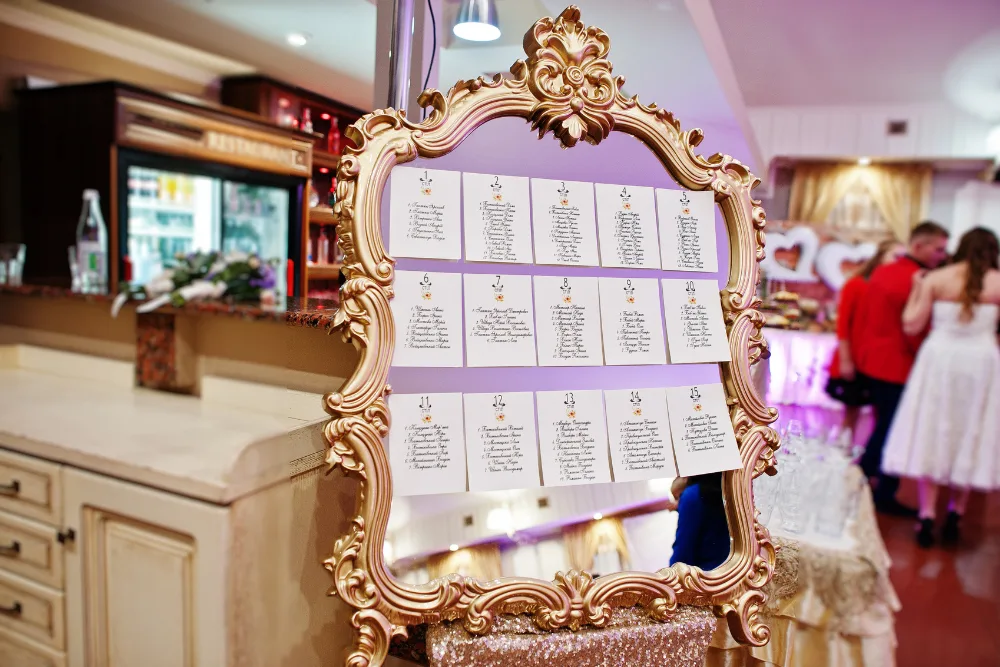
Once RSVPs arrive, your seating plan becomes the next core layer of organization. Instead of treating it like a puzzle, think of it as shaping the social atmosphere of your wedding.
Here’s a helpful approach:
- Start by grouping people who already know or enjoy each other.
- Mix families thoughtfully but avoid seating strangers at every table.
- Make sure anyone with mobility needs has easy access.
- Keep children near parents unless they’re part of a kids’ table.
- Place your most energetic friends closer to the dance floor.
Smart seating enhances conversations, comfort, and overall experience, a key goal of every thoughtful planning checklist for wedding events.
How an All-Inclusive Indoor Venue Simplifies Guest Management
Guest communication, seating, timing, and flow become far easier when your venue already provides structure. An all-inclusive indoor venue reduces the number of decisions you must manage independently and keeps all guest-related logistics connected.
With one coordinated team overseeing layout, seating chart setup, place settings, timing, and service, you avoid the gaps that often occur when multiple vendors operate separately. This makes your guest list management not only easier, but more accurate because updates can be made in one place rather than across several different vendors.
It’s one of the most practical advantages of choosing a full-service indoor space.
Creating a Smooth Guest Experience Through Communication
Your guests move through your celebration based on the information you share with them. When communication is clear early on, everything feels easier for you and for them. Guests know where to go, how to arrive, what to expect, and how to prepare, which leads to a smoother flow on the wedding day and far fewer last-minute questions.
A wedding website is the simplest way to keep everyone informed. It becomes your central hub, a single place where guests can check details anytime without messaging you directly. The site doesn’t need to be fancy; it just needs to be accurate and easy to navigate.
At minimum, your wedding website should include:
- Venue address with a link to maps for easy navigation
- Parking instructions so guests know where to enter and what to expect
- Dress code guidance, especially if your venue has a particular style or ambiance
- Timeline highlights, like ceremony start time and when doors open for the reception
- Accessibility notes for anyone who may need specific accommodations
- Important reminders, such as whether children are included or how plus-ones work
You can also add hotel recommendations, shuttle information, or a note about indoor venue climate (some rooms can be cool during dinner service). The clearer your website is, the more confident your guests feel, making it an essential part of effective guest list management and RSVP tracking.
Clear communication doesn’t just organize your guest list; it shapes the guest experience itself. When people know what to expect, they arrive relaxed and ready to celebrate.
Why Étage Helps Make Guest Management Effortless
An indoor venue built for structure and comfort transforms guest list management from a stressful chore into an organized system. Étage provides thoughtful layouts, coordinated service, and experienced support that help you stay on track from the moment you send invitations to the moment your guests sit down for dinner.
If you’re ready to plan with clarity and confidence, book a tour at Étage and see how our space brings your guest experience to life.
Frequently Asked Questions
What is the easiest way to start guest list management?
Begin by agreeing on your total guest capacity, then divide your potential guests into natural categories such as family, friends, colleagues, and extended groups. This helps you prioritize who fits into your A-list and who may fall into a second group depending on space. Keeping everything in one digital tracking system prevents confusion as the list evolves.
How do we manage A-list and B-list guests without hurting feelings?
Timing is everything. Send A-list invitations early, and wait for a portion of those RSVPs before sending B-list invitations. Avoid announcing your system to guests and keep all communication warm and positive. This approach ensures that everyone feels valued while maintaining your venue’s capacity limits.
What’s the best way to handle RSVP tracking?
Use a single platform to capture responses in real time. This could be a simple Google Sheet, an online guest list manager, or a wedding website tool. Track not just attendance but meal choices, plus-ones, allergies, and seating needs. A clear system helps your venue prepare accurately and reduces last-minute adjustments.
How do we handle guests who miss the RSVP deadline?
Most guests simply forget. A polite follow-up message works well and avoids misunderstandings. Something brief like, “We’re finalizing our headcount and wanted to check whether you’ll be joining us”, keeps the tone friendly while ensuring accuracy.
Why does guest list management matter so much for indoor venues?
Indoor spaces rely on accurate headcounts for seating, service timing, catering, and layout. A well-managed system ensures the room feels comfortable, the service team is prepared, and every detail is executed smoothly. Strong guest list organization helps transform your reception into a welcoming, well-orchestrated experience.