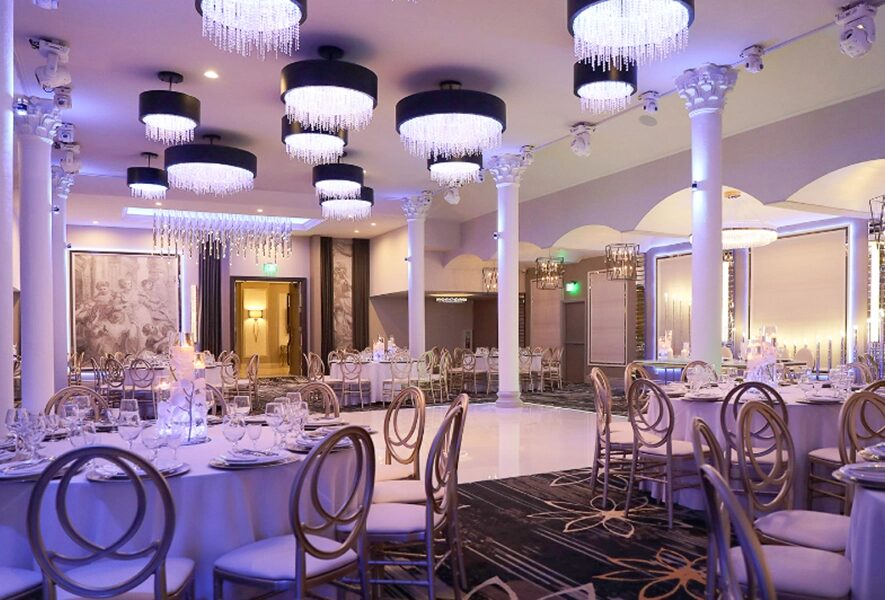
Wedding venue lights are the overhead fixtures, uplights, and specialty pieces a ballroom uses to shape mood, highlight color, and guide guests through each part of the night. The right setup turns a plain ballroom into a space that photographs well, matches your colors, and keeps the energy moving. The wrong setup leaves even a beautiful room looking flat under harsh, uneven light.
Most couples spend hours choosing flowers and linens, then leave lighting as an afterthought. That’s a costly habit, because light touches almost every other decision in the room. It changes how your colors read, how your photos turn out, and how the whole night feels once the sun goes down.
Once you understand how wedding venue lights work together, from soft overhead glow to color-changing accents, choosing the right setup for your reception gets a lot easier.
Quick Answer
- Ambient light (chandeliers, overhead fixtures) sets the base tone across the room
- Accent lighting (uplights, wall washes) adds color and highlights architecture
- Task lighting (pin spots, table lighting) keeps place settings and food visible
- Decorative lighting (string lights, LED walls, moving heads) creates a focal point on the dance floor
- Ask about color-changing LED systems before booking, since they let you match lighting to your colors without extra rental costs

What Wedding Venue Lights Actually Do for Your Reception
Lighting sets the mood, shapes your photos, and guides guests through the night more than almost any other single design choice.
A dim, warm room feels intimate. A bright, evenly lit room feels formal. Neither is right or wrong, but the choice should match the tone you’re going for. Wedding venue lights also affect how your photographer works. Warm, soft light flatters skin tones and pastel colors, while bold colored uplighting can turn a plain wall into a dramatic backdrop for portraits.
Beyond mood, light also guides behavior. Guests naturally gravitate toward the brightest, most active area of a room, which is why dance floors usually get the boldest lighting treatment while dining areas stay softer and more comfortable for conversation.
Types of Wedding Venue Lighting to Know Before You Book
The right wedding venue lights create depth in a room that a single overhead fixture never can. Most receptions layer four types of light, ambient, accent, task, and decorative, instead of relying on one flat wash of light across the whole room.
Ambient and Overhead Lighting
Ambient light is the base layer, usually chandeliers or ceiling fixtures that fill the room with general brightness. This is the lighting guests notice least, but it sets the foundation every other layer builds on. A ballroom with dazzling chandeliers already has strong ambient lighting built in, so accent and decorative pieces can focus purely on mood instead of basic visibility.
Accent Lighting and Uplighting
Accent lighting highlights specific features: a wall, a column, a floral arrangement, or the head table. Uplights placed along the walls are the most common form of wedding venue lighting, and they’re often color-matched to the couple’s palette. A room with neutral walls gives accent lighting more room to shine, since the color shows up clearly instead of blending into existing wall tones.
Task Lighting for Tables and Food
Task lighting keeps functional areas visible: guest tables, the buffet or plated service line, and the bar. Pin spots aimed at centerpieces make florals pop in photos, while softer downlighting over food service keeps everything easy to see without washing out the room’s overall mood.
Decorative and Specialty Lighting
This category covers string lights, LED video walls, moving-head fixtures, and anything built purely for visual impact. An LED wall behind the head table or DJ booth adds motion and color without needing extra décor, and it works well for slideshows, monograms, or live-streaming the ceremony to guests who couldn’t attend in person.

Best Wedding Lighting Ideas for Every Reception Moment
Short answer: shift your lighting through the night, soft and warm for cocktail hour, balanced and flattering for dinner, and bold with movement once the dance floor opens.
Cocktail Hour Lighting
Keep cocktail hour lighting soft and warm. This is when guests are mingling and taking photos, so flattering, even light matters more than dramatic color. A foyer or patio with warm sconces and ambient glow works well here, and it’s often the first place guests notice your wedding venue lights in action.
Dinner Lighting
During dinner, layer soft ambient light with pin spots on centerpieces and gentle color-matched uplighting along the walls. Guests need enough light to see their food and each other clearly, so avoid anything too dim or too colorful during this stretch of the night.
Dance Floor Lighting
Once dinner wraps, this is where wedding reception lighting can get bold. Color-changing LED systems, a lit dance floor, and moving lights synced to the music energize the room and signal that it’s time to move from dinner mode into celebration mode.
Decorating with Lights for a Wedding: Color, Mood, and Style
Decorating with lights for a wedding usually starts with color temperature. Warm light (soft yellow and amber tones) creates a cozy, romantic feel, while cool light (crisp white and blue tones) feels modern and sharp. Neither is better, but mismatched temperatures in the same room can look unintentional in photos.
If you’ve already chosen a wedding color palette by season, match your lighting to it directly. A spring palette of blush and sage usually pairs with warm, soft uplighting, while a winter palette of navy and emerald often looks striking under cooler, jewel-toned accents. Choosing wedding venue lights that match your palette keeps the whole room feeling intentional instead of random.

Wedding Reception Lighting Mistakes to Avoid
A few mistakes keep showing up when couples plan their lighting, and each one wastes good wedding venue lighting on a room that still feels flat.
- Relying on one flat layer of light. A room with only overhead lighting looks harsh in photos and flat in person. Layering ambient, accent, and task lighting adds depth that a single light source can’t.
- Ignoring color temperature clashes. Mixing warm string lights with cool blue uplighting in the same space can make a room look mismatched instead of intentional.
- Skipping a night walkthrough. A room looks different at 7 p.m. than it does at 2 p.m. Ask to see the space with the lights on, at the time of day your reception will actually happen.
- Deciding on dance floor lighting last. This is one of the most photographed parts of the night. Plan it early instead of treating it as an afterthought once every other detail is locked in.
Étage’s All-Inclusive Packages Cover Lighting and More
Booking wedding venue lights as part of a larger package removes one more vendor from your list and keeps pricing predictable. Étage’s all-inclusive wedding packages bundle color-coordinated lighting design together with catering and bar service, tables, chairs, and linens, entertainment setup with sound and AV, professional staff for setup and cleanup, valet and self-parking, and a private bridal room, all under one contract and one price. Instead of hiring a lighting company on top of a caterer, a rental company, and a décor team, your lighting design comes built into the same package as everything else.
This matters most for couples juggling several vendors on a tight timeline. A rented ballroom with lighting priced separately can add $800 to $2,500 to your final bill, as covered earlier in this guide. An all-inclusive package folds that cost into one predictable total instead of a surprise line item close to your wedding date.

How Étage’s Wedding Venue Lights Bring Every Reception to Life
A ballroom’s built-in lighting system does most of the heavy lifting, so the venue you choose matters as much as any rented fixture. Étage Event Venue in Los Angeles offers a 3,800-square-foot ballroom with dazzling chandeliers, a color-coordinated LED lighting system, an LED wall video screen, and a white marble dance floor that reflects light beautifully during the reception. The team works directly with couples to set colors and moods for each part of the night, from a soft foyer cocktail hour to a bold, color-shifting dance floor finale.
Schedule Your Tour at Étage Event Venue. Layer your light, match it to your colors, and let the room shift with the night. That’s what great wedding venue lights are built to do.
Frequently Asked Questions
How much does professional wedding lighting typically cost if it’s not included in the venue?
Standalone lighting packages from outside vendors usually run $800 to $2,500, depending on how many uplights, pin spots, and specialty pieces are involved. Booking a venue with lighting already built into the ballroom removes this cost entirely.
Can I bring in my own lighting company, or does the venue handle it in-house?
This depends on the venue’s policy. Some venues require an in-house lighting team for insurance and setup reasons, while others allow outside vendors. Always confirm this detail before signing a contract if you have a specific lighting designer in mind.
Does indoor lighting affect photos and video differently than outdoor lighting?
Yes. Indoor lighting is controllable and consistent all night, while outdoor lighting shifts with the sun and can create harsh shadows during golden hour or total darkness after sunset. Indoor ballrooms give photographers a predictable environment to work with from ceremony to last dance.
What’s the difference between uplighting and pin spot lighting?
Uplighting sits on the floor and casts color upward along walls or columns, while pin spots are mounted overhead and aim a narrow beam straight down onto a specific object, usually a centerpiece or cake. Both add depth, but they serve different purposes in the room.
How far in advance should lighting design be finalized?
Aim to finalize lighting color and placement about two to three months before the wedding, once your color palette and décor are set. This gives the venue or lighting vendor enough time to program color-changing systems to match your exact palette.